Sisyphus Needs a Vacation
Since Iceland, I got married!
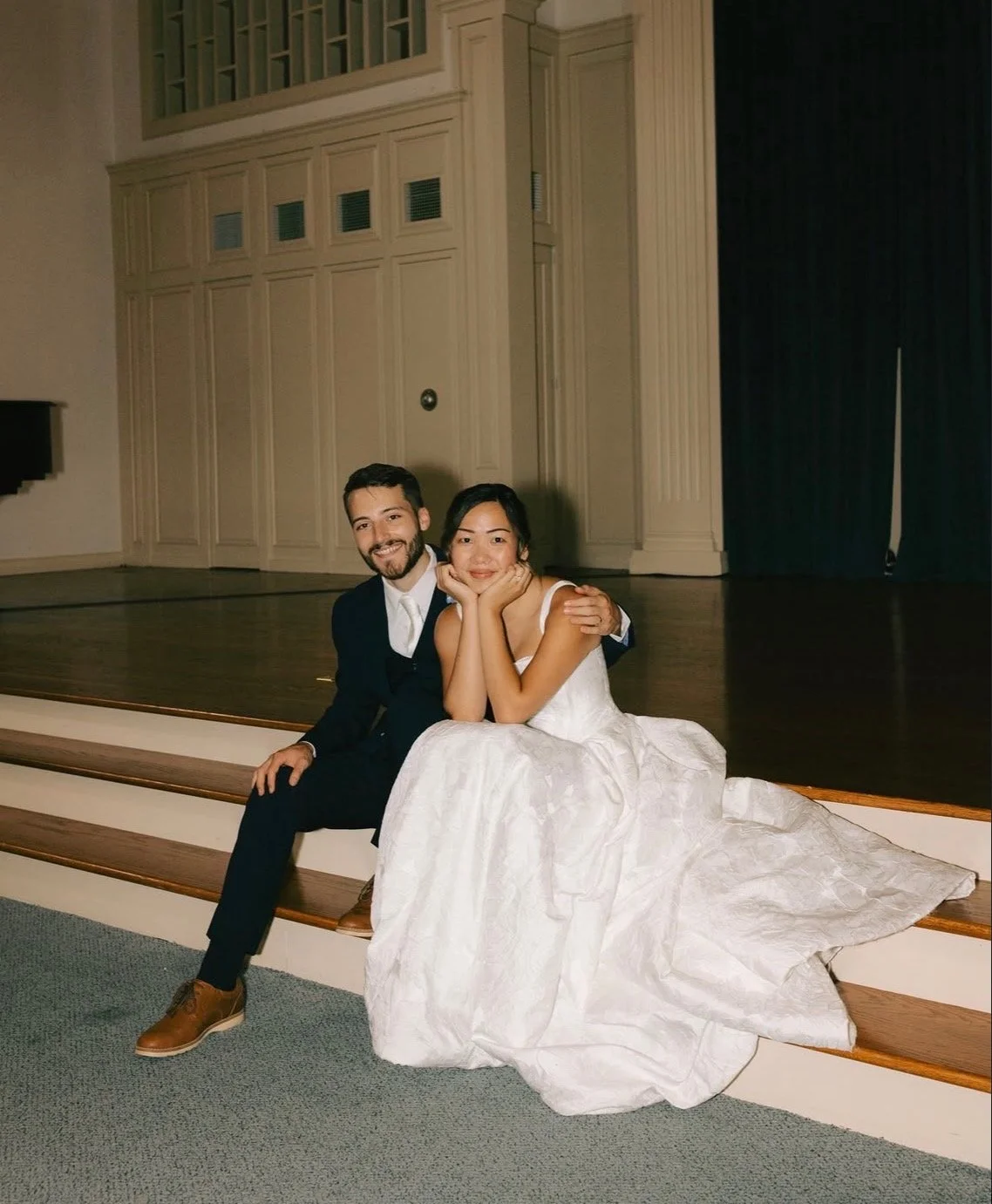
Me and my lovely wife.
Big life changes!
The traditional way to celebrate this in the states is by taking a nice vacation somewhere romantic, so we planned a trip to Oahu just west of Waikiki Beach. Our view from the hotel overlooks a marina - yachts and party boats from afar, and accumulated trash floating at the edge if you walk closer.
If Iceland naturally inspires an “adventurous” writing, than Hawaii probably inspires a writing rooted in culture, tradition, and island life. But unfortunately, I am awfully out-of-the-know as a visitor here. We pass statues of kings and read excerpts at restaurants about famous musicians who rooted their lives here, and after scratching the surface of this place and its stories I feel even more like a tourist than I did before.
And so since I have established myself as unqualified to write about Hawaiian culture, tradition, and island life, we’ll be pivoting in this post to another topic: vacation.
“I need to take a vacation” is a phrase we’re all familiar with and have probably said before, but I want to look a little closer at what we’re assuming about life when we say that. In the US, we have a standard 2-4 weeks of vacation time where we live for more than the 2-day weekend outside of work. Our usual is 5 days of work with 5 short home evenings, and then two days of weekending.
I’m going to try to keep this from becoming a commentary on work. The underlying assumption with vacation is that we need time away from the boulder we’ve been tasked with pushing up the hill. It’s almost like we’re Sisyphus thinking to himself “if I only had one week to sit down and rest my shoulders, I’d be ready to get back to pushing this boulder again.”
It’s an abrasive example, but I use it because Sisyphus’s struggle immediately shifted from external to internal as soon as his condition was sealed. Adam was given a similar condition in the garden: “Cursed is the ground because of you; through painful toil you will eat food from it all the days of your life.”
No matter how strong, smart, or witty Sisyphus was, he would never push the boulder onto the top of that mountain. His condition was fixed externally. Albert Camus said “one must imagine Sisyphus happy” - which of course there’s some truth to, but I really dislike the phrase. This echoes corporate jargon touting “the mountain is you” when you’ve been placed in a cubicle and given a stack of paperwork and told that you could be promoted in 15 years if you do a good enough job (or entrepreneurial jargon also touting “the mountain is you” when you’ve been instructed to solicit business from your friends, family, and distant contacts and told that you could “make it” if you pour your heart, soul, and thousands of dollars into your supplier’s pockets).
Yes, yes, I know there’s “joy in the journey” and there’s something exciting about starting a new career, new entrepreneurial effort, new anything, and part of that excitement comes from knowing that you could “make it” and you could also fail miserably! But saying Sisyphus must be happy… he was quite literally a prisoner and the opposite of free. No shot of “making it” and as soon as he got close to the bottom of his paperwork stack, a manager noticed and dumped more on his desk. Is the best long-term solution here just to nestle in and get happy wherever we find ourselves? Should we be happy in chains?
Paul and Silas from the book of Acts certainly were, but let’s draw a distinction here. Paul and Silas dealt with physical chains, but were they really chained? Well, their bodies were not free; they were chained. But a part of them remained untouched.
Walk through a graveyard; the only thing we get to do in life is lay it down. That’s the direction all of this is going. Jesus read ahead and told us about the plot twist hidden in the alternative path: “If you cling to your life, you will lose it.”
We really should be able to love whoever we want to love, because if you want to love someone, that means some part of you is willing to lay down your life for them. If you’re expecting something else from love, something you can hold and cling to and make obey your wishes, you might need to point your compass back toward love.
If you can imagine Sisyphus happy in the worst case of bondage known in literature, then maybe you too can imagine yourself happy in the worst case of bondage in your own life. But what if you’re not supposed to be happy in bondage? What if unhappiness in bondage is an alarm system letting you know there is more to life?
Of course some things are externally fixed. You can’t change the family, geographical location, and DNA you were born with. You find yourself on this planet with a history that predates you, with an array of advantages and disadvantages to interact with. If I were a motivational speaker, I’d shift my focus now toward the future and all the things you can change and the best way to leverage the advantages and minimize the disadvantages to build an ultra-maximized and very interesting life (with more than a few vacations).
But I am not a motivational speaker. Most of your life (and even the life of a motivational speaker) is built in small moments, actions, attitudes, and thoughts. Sometimes, the uncomfortable places/people/situations we’d rather distance ourselves from are the exact places we’re supposed to be, sometimes for our sake, sometimes for others. And sometimes we tell ourselves we’re “sticking it out” for the sake of others, when in reality, we’ve just made ourselves happy in a place of bondage.
Some of us are pushing a boulder, and the invitation here is to look that in the face. Boulders come in many shapes and sizes: debt to pay off, the obligation to support family, abuse, memories of hurting others, and memories of being hurt by others. In many cases, instant freedom isn’t a clear option. And even though the situation may be less than ideal, we don’t need to imagine ourselves happy while we’re there, but we also don’t need to make it worse than it is. It just is.
Sisyphus can apply external pressure to push the boulder even harder, but that won’t do anything. He could apply internal pressure to make himself happy, and he might even be successful. But for Sisyphus to be truly free, someone with authority over his punishment has to intervene.
Breaks are nice and vacations are nice and I don’t want to overcomplicate something that’s very simple, but our condition is one we can’t fix ourselves, even with infinite vacation. Our condition has to be fixed by someone with authority over Adam’s curse.
And at the same time it sounds really fun to move to a coastal town and buy a moped and a surfboard and live on the edge.
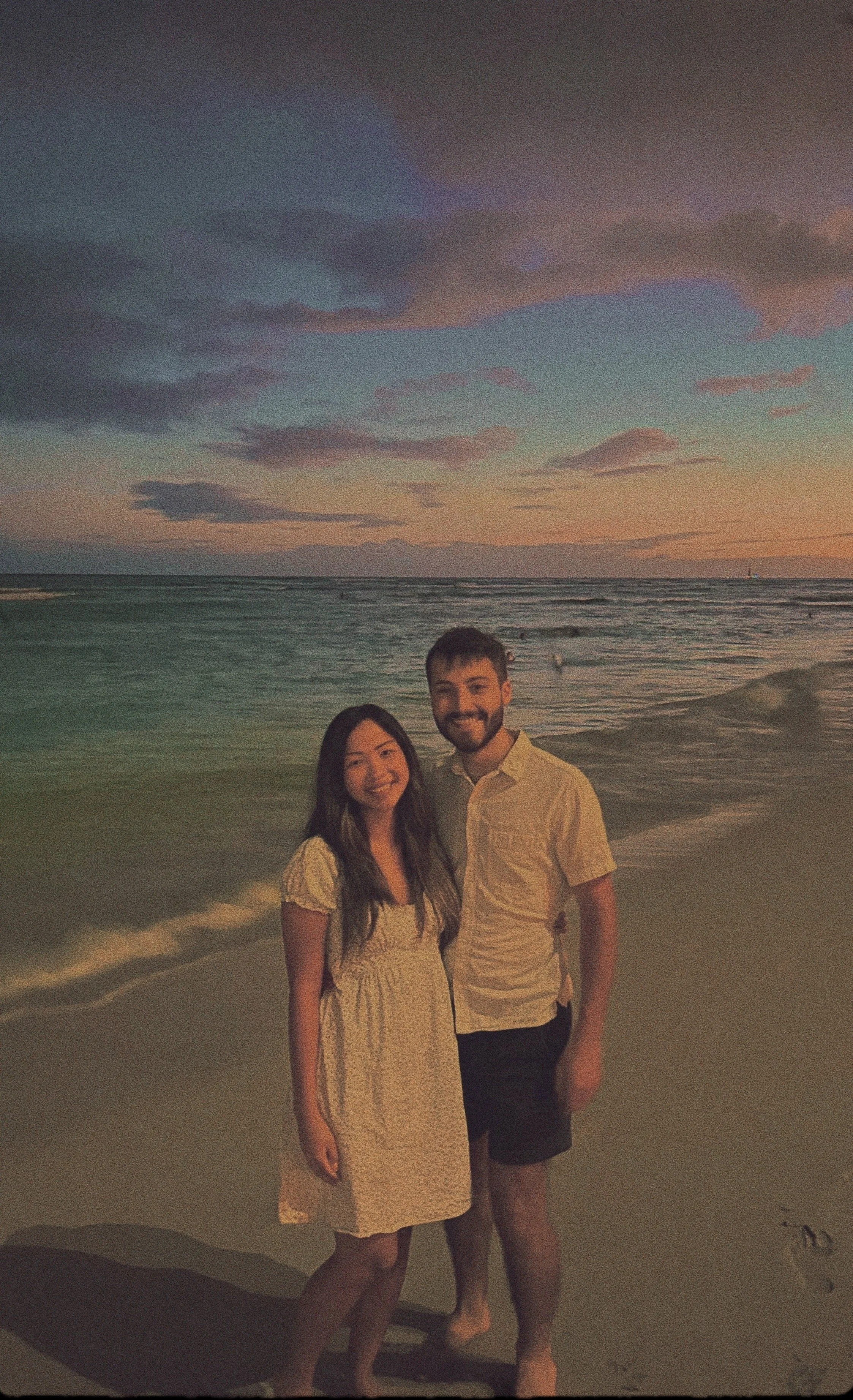
Me and my gorgeous wife toward the end of our honeymoon.
An enthusiastic stranger took this great picture for us.
We recognize the “greener grass” metaphor because life constantly takes the shape of two fields - the one you’re given, and the one just over the fence. I’ve told myself “once I finally ____, then I’ll feel more settled” - and it’s a little bit true. When I finally got the job, I felt more settled than before. When I finally moved, I felt more settled than before. When I finally got married, I felt more settled than before.
But you eventually find yourself standing in the pasture you’re supposed to be, and it won’t be perfect. You’ll occasionally step on a thistle, and if you keep looking through the fence, you’re bound to become dissatisfied on the side you stand. As the seasons change, the grass may become less green, and then green again when the rain comes.
“Do not covet or envy” is an invitation to presence without comparison. And it runs perpendicular to the message of many modern cultures, which invite us to compare without presence. Social media, onboarding incentives, and home-shopping websites enhance our ability to compare, and treat personal involvement as the leftover heel at the end of the loaf of bread. Maybe you go for it if you have to.
I’m learning more and more that the choice I have is whether I’ll be present with whatever is in front of me, or if I’ll put that energy into distancing myself from it.
Vacations are great and I certainly intend to travel more in the future, but vacation is just one tooth in the cog of life. It’s something to take joy in, but isn’t the rest of life also this way? We don’t have to put any part of life on a pedestal it doesn’t belong on. It just is.
O O
_\
\_____
“Enjoy what you have rather than desiring what you don’t have. Just dreaming about nice things is meaningless - like chasing the wind.” - Eccl 6:9 (nice)
